💻 Developer Endpoint Protection is here: find every credential on every developer machine, before attackers do.
3
💻 Developer Endpoint Protection is here: find every credential on every developer machine, before attackers do.
3


Infostealers don't break in. They steal credentials sitting in plaintext in .env files, shell history, CLI caches, and AI agent transcripts.
No repo scanner reaches them. GitGuardian does.

of laptop credentials are found in AI directories/logs.
The fastest-growing surface isn't a repo, it's a local AI cache.
the baseline leak rate for AI-coding-tool users.
Every assistant writes credentials to disk, the developer never looks again.
.svg)
Your EDR is built to detect malware. We tell you what the malware or the malicious AI agent can actually steal.
And gives AppSec and Incident Response teams everything they need when something goes wrong.
Cursor, Claude Code, Copilot. They write credentials into history files, transcripts, and configs you'll never check. ggshield finds existing ones. AI agent hooks stop new ones.
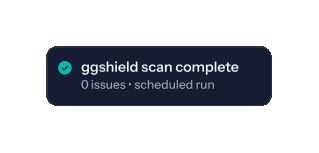
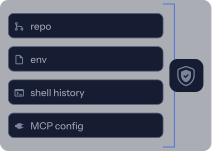
Secrets in .env, history files, and AI agent caches never hit a repo. Your pipeline scanners never see them. GitGuardian does.
A machine is compromised. GitGuardian surfaces every credential on it, ranked by severity. You know what was stolen and what to revoke first.
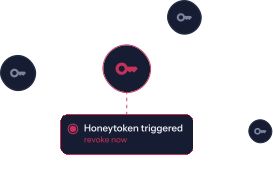
Credential visibility in three steps. Deployed in minutes through your existing MDM. No new toolchain.
Deploy ggshield to your fleet through Intune, Jamf, or Kandji. ggshield is the #1 most-installed security app on GitHub.
Schedule scans across .env files, shell history, MCP configs, and AI coding agent caches. Only hashed metadata leave the machine.
Every finding is ranked by machine and severity. Unvaulted credentials push to your existing vault. No manual triage required.
No file contents leave the developer machine.
First, see what's there.
.svg)
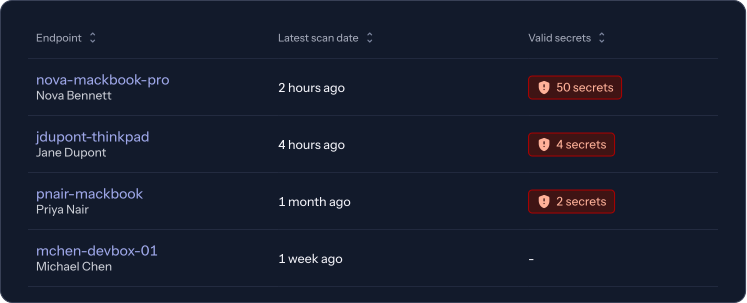
Then close the three gaps your security stack leaves wide open.
.svg)
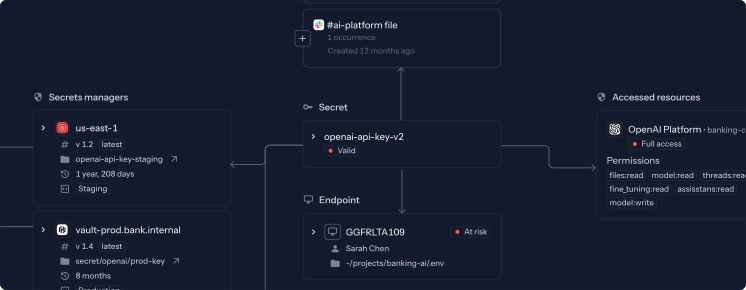
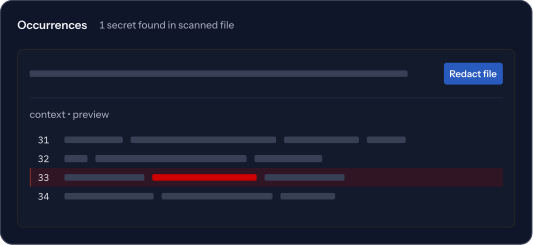
Here is how we’re delivering value to customers
"GitGuardian reduces the burden on developers and platform engineers integrating smoothly into existing processes.”

"GitGuardian lets us analyze the entire GitHub perimeter including developers' personal repos outside our control.”

"Prevention is the game changer. A secret that's not exposed poses no security risk and requires no remediation.”
.svg)
.svg)

.svg)






.svg)
.svg)